Learning Spanish is one of the most rewarding skills you can pick up — not only because it’s the second most widely spoken language in the world, but because it opens doors to culture, travel, work, and relationships in ways few other languages can. But with the explosion of apps, YouTube channels, and “10-minute fluency hacks,” it’s also easy to feel overwhelmed or misled by quick-fix promises.
The good news? Decades of research in linguistics, cognitive psychology, and second-language acquisition provide real guidance on what actually works. Here’s a practical, evidence-based roadmap that goes far beyond generic tips.
Learning Spanish for Adults: A Practical Guide to Becoming Fluent
Learning a new language as an adult can feel intimidating—but it doesn’t have to be. In fact, adults often learn languages more efficiently than kids because they already understand grammar concepts, have discipline, and know their learning style. If you’re thinking about starting Spanish, here’s a practical, beginner-friendly guide to help you build momentum and actually stay consistent.
Why Spanish Is a Great Choice for Adult Learners
1. It’s one of the most widely spoken languages in the world.
More than 500 million people speak Spanish globally, making it incredibly useful for travel, work, and everyday communication.
2. It opens opportunities.
Many industries—customer service, healthcare, tourism, BPO, education—prefer or even require bilingual employees.
3. It’s approachable and beginner-friendly.
Spanish pronunciation is straightforward, the alphabet is familiar, and many words are similar to English.
Why are you learning Spanish?
Before getting cracking on your Spanish language learning journey, it’s important to be aware of the different goals that you have for language learning.
- Are you hoping to learn conversational Spanish for a short vacation or trip?
- Are you seeking to learn to be fluent in Spanish, whether for a more meaningful vacation or work purposes?
Also, it’s important to be realistic about your dedication:
- How much time do you have to commit to learning a language?
- Are you hoping to study Spanish alone and for free?
- Are you happy to invest money in an immersion course to that you learn Spanish far more quickly?
Bear in mind that there’s no quick fix for language learning and whatever method you choose, committing time and energy – whether that’s three 20-minute windows of study weekly or a month-long course studying Spanish abroad – is the only guarantee for success.
Although you might want to learn Spanish in a week or six months, there’s no hard and fast rule as to how long it takes to reach a conversational or fluent level, and patience and dedication are essential.
Learning Spanish as an adult is very different from children picking up languages and can seem a lot more difficult. However, it is possible to become fluent in Spanish, regardless of your age.
Four Strategies for learning Spanish for adults
1. Use Immersive Input (Listening + Reading)
Adults learn faster when exposed to meaningful, real-life Spanish.
- Listen to Spanish podcasts, beginner audiobooks, or YouTube channels.
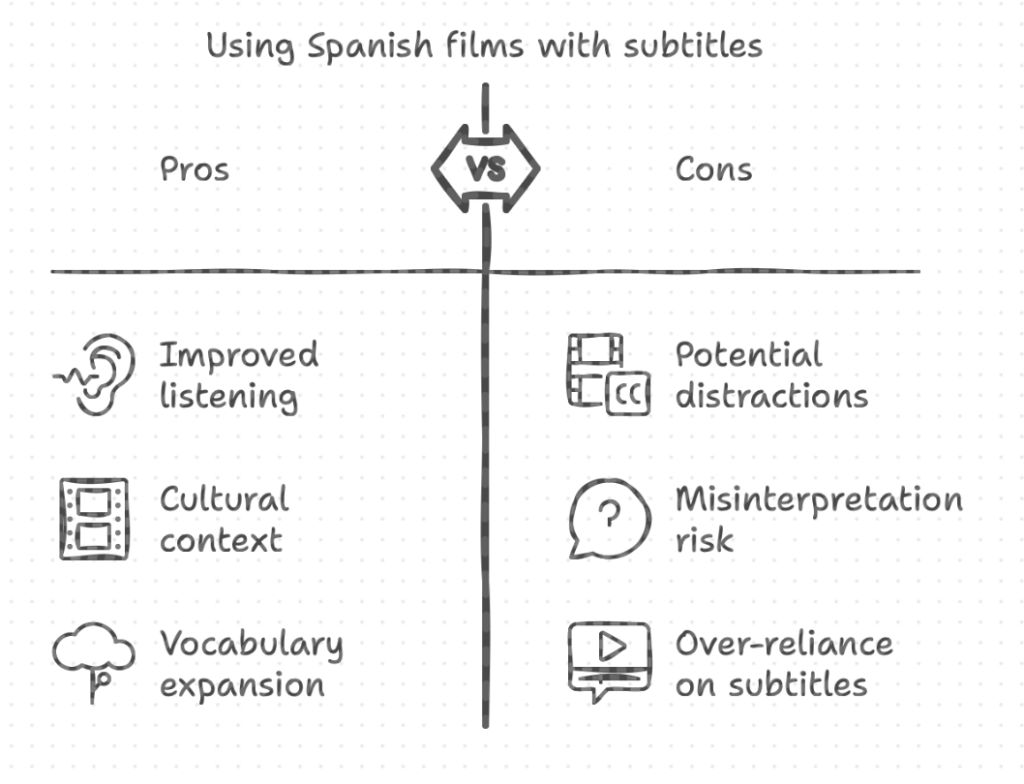
- Read simple articles, graded readers, or Spanish subtitles while watching shows.
- Choose content that matches your level so you don’t feel overwhelmed.
Why it works: Constant exposure trains your brain to recognize patterns, vocabulary, and natural grammar without memorizing long lists.
2. Practice Speaking Early and Often
Many adult learners hesitate to speak, but early speaking practice builds confidence.
- Use language exchange apps (Tandem, HelloTalk).
- Join online classes or group lessons.
- Practice with a tutor once or twice a week.
- Even talking to yourself in Spanish helps!
Why it works: Speaking activates long-term memory and reduces “mental translation,” helping you think more naturally in Spanish.
3. Build Vocabulary with Spaced Repetition
Use tools like Anki, Quizlet, or Memrise to learn words efficiently.
- Study 10–15 minutes a day.
- Focus on high-frequency words first (the words used in daily conversations).
- Add phrases instead of single words (e.g., tengo hambre instead of just hambre).
Why it works: Spaced repetition trains your memory to recall vocabulary over longer periods, minimizing forgetting.
4. Apply Spanish to Your Daily Life
Adults retain language better when connecting it to real routines.
- Change your phone or app settings to Spanish.
- Label items around your house (e.g., la puerta, la mesa).
- Write simple daily journal entries in Spanish.
- Use Spanish when cooking, shopping, or doing hobbies.
Why it works: Daily usage makes Spanish feel natural and relevant, turning passive knowledge into active skills.
Best Practices for Learning Spanish as an Adult
1. Set realistic, specific goals
Instead of saying “I want to be fluent,” break it down:
- “I want to learn 20 new words per week.”
- “I want to hold a basic conversation in 3 months.”
Clear goals make progress measurable.
2. Build a daily routine—even 10 minutes helps
Consistency beats long, irregular study sessions. A short daily routine could be:
- 5 minutes vocabulary review
- 5 minutes listening practice
- 5 minutes speaking
That’s already 15 minutes and very doable for busy adults.
3. Use multiple learning tools
Different tools cover different aspects of the language:
- Apps (Duolingo, Babbel) → vocabulary and basics
- YouTube (Spanish Your Way, Butterfly Spanish) → grammar explained simply
- Podcasts → listening practice
- Language exchange → real conversations
A mix keeps learning interesting and well-rounded.
4. Practice speaking early
Many adult learners delay speaking because they’re scared of making mistakes. Don’t wait until you feel “ready”—you’ll learn faster through real practice than perfect grammar.
5. Immerse yourself in Spanish content
Exposure is key. Start with simple content:
- Spanish subtitles on shows you already know
- Beginner-friendly Spanish music
- Short Spanish videos or podcasts
Your ears will get used to the rhythm and flow of the language.
6. Learn grammar in small, simple chunks
Spanish grammar is logical but can feel overwhelming when taken all at once. Focus on one concept per week—like verb conjugations or gendered nouns—and apply them in sentences regularly.
Common Challenges for Adult Learners (and how to overcome them)
1. “I don’t have time.”
Try the micro-learning method: 5–10 minutes anytime during the day. Consistency is what matters most.
2. “I’m afraid of sounding wrong.”
Mistakes are part of the process. Even native speakers make them. Think progress, not perfection.
3. “I learned before but forgot everything.”
Adults often underestimate what they remember—once you begin again, the information usually comes back quickly.
Why Taking a Spanish Class Makes a Big Difference
Self-study is great, but structured classes offer:
- A clear learning path
- Accountability
- Immediate feedback on pronunciation and grammar
- Real conversation practice
- Supportive classmates who are learning at the same pace
If you’re serious about becoming confident in Spanish, a guided course can help you progress faster and avoid common mistakes.
Ready to Start Your Spanish Journey?
Spanish is more than a skill—it’s an investment in opportunities, culture, and connection. And the best part? You can start at any age.
If you want professional guidance and a structured, beginner-friendly program, enroll in our Spanish classes and begin your journey with confidence.